Registration Successful...
null you have successfully logged registered and logged in

Clinical trial results

Tick Icon

IMFINZI is an FDA-designated breakthrough treatment

The FDA granted breakthrough therapy designation to IMFINZI for removable stomach (gastric) cancer or gastroesophageal junction cancer (adenocarcinoma) when used with chemotherapy* before and after surgery, followed by IMFINZI alone.

Breakthrough therapy designation is given to a medication that may offer a substantial improvement over the current treatments for a serious disease or condition. In 2025, the FDA approved IMFINZI + chemotherapy* before and after surgery, followed by IMFINZI alone, to treat stomach (gastric) cancer or gastroesophageal junction cancer (adenocarcinoma) that can be removed with surgery.

How was IMFINZI studied?

A clinical trial compared two groups of adults with stomach (gastric) cancer or gastroesophageal junction cancer that can be removed with surgery.

474

IMFINZI + chemotherapy* group

People in the IMFINZI + chemotherapy* group received 2 cycles of IMFINZI with chemotherapy* before and after surgery, followed by IMFINZI alone.

474

Chemotherapy* + placebo group

People in the chemotherapy* + placebo group received 2 cycles of chemotherapy* with placebo before and after surgery, followed by placebo alone.

A placebo is a treatment that doesn't contain any medicine. Scientists use it in clinical studies to compare results with another treatment.

*Fluorouracil, leucovorin, oxaliplatin, and docetaxel (FLOT).

The clinical trial followed both groups of adults for an average of nearly 2 years (24 months).

Stethoscope Icon

IMFINZI is the first and only immunotherapy to be used together with chemotherapy* before and after surgery, and then alone, to treat patients with stomach (gastric) cancer or gastroesophageal junction cancer that can be removed with surgery.

This is a treatment advancement that significantly increased the amount of time these patients lived without their cancer getting worse or coming back (when compared to chemotherapy* and placebo).

More people taking IMFINZI + chemotherapy* didn’t see their cancer come back or get worse compared to those taking chemotherapy* + placebo

Event-free survival

One goal was to measure the length of time after treatment started that people had without an event occurring (called event-free survival). An event was defined as cancer getting worse, cancer coming back, or death from any cause.

IMFINZI + chemotherapy* group

0%

307 out of 474 people did not see their cancer
get worse or come back
vs

Chemotherapy* + placebo group

0%

256 out of 474 people did not see their cancer
get worse or come back

IMFINZI plus Chemo Statistics

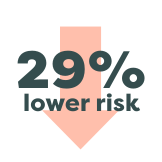
IMFINZI + chemotherapy* before and after surgery, then IMFINZI alone, reduced the risk of cancer getting worse or coming back

In a clinical trial, people who received IMFINZI + chemotherapy* before and after surgery, then IMFINZI alone, were 29% less likely to have their cancer get worse or come back.

There were more people still living who took IMFINZI + chemotherapy* compared to those who took chemotherapy* + placebo

314

out of 474

people in the IMFINZI + chemotherapy* group were still living

compared to

282

out of 474

people in the chemotherapy* + placebo group were still living

IMFINZI + chemotherapy,* followed by IMFINZI alone, may provide hope for a longer life

*Fluorouracil, leucovorin, oxaliplatin, and docetaxel (FLOT).

At the time of data cut-off.

Start the conversation with your doctor

See a list of questions

Important Safety Information

What is the most important information I should know about IMFINZI® (durvalumab)?

IMFINZI is a medicine that may treat certain cancers by working with your immune system. IMFINZI can cause your immune system to attack normal organs and tissues in any area of your body and can affect the way they work. These problems can sometimes become severe or life-threatening and can lead to death. You can have more than one of these problems at the same time. These problems may happen anytime during treatment or even after your treatment has ended.

What is IMFINZI?

IMFINZI is used in combination with FLOT prior to and after surgery followed by IMFINZI alone to treat adults with a type of stomach cancer called GC or GEJC that can be removed by surgery.

It is not known if IMFINZI is safe and effective in children.

Call or see your healthcare provider right away if you develop any new or worsening signs or symptoms, including:

  • Lungs Problem Symptoms

    Lung problems: cough, shortness of breath, and chest pain

  • Intestinal Problem Symptoms

    Intestinal problems: diarrhea (loose stools) or more frequent bowel movements than usual; stools that are black, tarry, sticky, or have blood or mucus; and severe stomach-area (abdomen) pain or tenderness

  • Liver Problem Symptoms

    Liver problems: yellowing of your skin or the whites of your eyes, severe nausea or vomiting, pain on the right side of your stomach area (abdomen), dark urine (tea colored), and bleeding or bruising more easily than normal

  • Hormonal Gland Symptoms

    Hormone gland problems: headaches that will not go away or unusual headaches; eye sensitivity to light; eye problems; rapid heartbeat; increased sweating; extreme tiredness; weight gain or weight loss; feeling more hungry or thirsty than usual; urinating more often than usual; hair loss; feeling cold; constipation; your voice gets deeper; dizziness or fainting; and changes in mood or behavior, such as decreased sex drive, irritability, or forgetfulness

  • Kidney Problem Symptoms

    Kidney problems: decrease in your amount of urine, blood in your urine, swelling of your ankles, and loss of appetite

  • Skin Problem Symptoms

    Skin problems: rash; itching; skin blistering or peeling; painful sores or ulcers in mouth or nose, throat, or genital area; fever or flu-like symptoms; and swollen lymph nodes

  • Pancreas Problem Symptoms

    Pancreas problems: pain in your upper stomach area (abdomen), severe nausea or vomiting, and loss of appetite

  • Other Organ Problem Symptoms

    Problems can also happen in other organs and tissues. These are not all of the signs and symptoms of immune system problems that can happen with IMFINZI. Call or see your healthcare provider right away for any new or worsening signs or symptoms, which may include: Chest pain, irregular heartbeats, shortness of breath or swelling of ankles; confusion, sleepiness, memory problems, changes in mood or behavior, stiff neck, balance problems; tingling, numbness or weakness of the arms or legs; double vision, blurry vision, sensitivity to light, eye pain, changes in eye sight; persistent or severe muscle pain or weakness, muscle cramps, joint pain, joint stiffness or swelling; and low red blood cells and bruising

  • Infusion Reaction Signs and Symptoms

    Infusion reactions that can sometimes be severe or life-threatening. Signs and symptoms of infusion reactions may include: chills or shaking, itching or rash, flushing, shortness of breath or wheezing, dizziness, feel like passing out, fever, and back or neck pain

  • Rejection of a Transplanted Organ or Tissue

    Rejection of a transplanted organ or tissue. Your healthcare provider should tell you what signs and symptoms you should report and monitor you depending on the type of organ or tissue transplant that you have had

  • Transplant Complications Symptoms

    Complications, including graft-versus-host disease (GVHD), in people who have received a bone marrow (stem cell) transplant that uses donor stem cells (allogeneic). These complications can be serious and can lead to death. These complications may happen if you underwent transplantation either before or after being treated with IMFINZI. Your healthcare provider will monitor you for these complications

Getting medical treatment right away may help keep these problems from becoming more serious. Your healthcare provider will check you for these problems during your treatment with IMFINZI. Your healthcare provider may treat you with corticosteroid or hormone replacement medicines. Your healthcare provider may also need to delay or completely stop treatment with IMFINZI if you have severe side effects

Before you receive IMFINZI, tell your healthcare provider about all of your medical conditions, including if you:

  • have immune system problems such as Crohn's disease, ulcerative colitis, or lupus
  • have received an organ or tissue transplant, including corneal transplant
  • have received or plan to receive a stem cell transplant that uses donor stem cells (allogeneic)
  • have received radiation treatment to your chest area
  • have a condition that affects your nervous system, such as myasthenia gravis or Guillain-Barré syndrome
  • are pregnant or plan to become pregnant. IMFINZI can harm your unborn baby
  • Females who are able to become pregnant:

    • Your healthcare provider will give you a pregnancy test before you start treatment with IMFINZI.
    • You should use an effective method of birth control during your treatment and for 3 months after the last dose of IMFINZI. Talk to your healthcare provider about birth control methods that you can use during this time.
    • Tell your healthcare provider right away if you become pregnant or think you may be pregnant during treatment with IMFINZI.
  • are breastfeeding or plan to breastfeed. It is not known if IMFINZI passes into your breast milk. Do not breastfeed during treatment and for 3 months after the last dose of IMFINZI.

Tell your healthcare provider about all the medicines you take, including prescription and over-the-counter medicines, vitamins, and herbal supplements.

What are the possible side effects of IMFINZI?

IMFINZI can cause serious side effects (see above).

The most common side effects of IMFINZI when used with fluorouracil, leucovorin, oxaliplatin, and docetaxel (FLOT) in adults with gastric cancer (GC) or gastroesophageal junction adenocarcinoma (GEJC) that can be removed by surgery include: diarrhea; nausea; inflammation of the nerves causing numbness, weakness, tingling, or burning pain of the arms and legs; feeling tired; hair loss; decreased appetite; rash; stomach (abdominal) pain; vomiting; muscle and joint pain; fever; and pain and sores in the mouth.

Tell your healthcare provider if you have any side effect that bothers you or that does not go away. These are not all the possible side effects of IMFINZI. Ask your healthcare provider or pharmacist for more information.

Call your doctor for medical advice about side effects. You may report side effects related to AstraZeneca products Report side effects related to AstraZeneca products. If you prefer to report these to the FDA, either visit www.FDA.gov/medwatch or call 1-800-FDA-1088.

Call your doctor for medical advice about side effects. You may report side effects related to AstraZeneca products Report side effects related to AstraZeneca products. If you prefer to report these to the FDA, either visit www.FDA.gov/medwatch or call 1-800-FDA-1088.

What is IMFINZI?

IMFINZI is used in combination with FLOT prior to and after surgery followed by IMFINZI alone to treat adults with a type of stomach cancer called GC or GEJC that can be removed by surgery.

It is not known if IMFINZI is safe and effective in children.

What is IMFINZI?

Important Safety Information

What is the most important information I should know about IMFINZI® (durvalumab)?

IMFINZI is a medicine that may treat certain cancers by working with your immune system. IMFINZI can cause your immune system to attack normal organs and tissues in any area of your body and can affect the...

IMFINZI is a medicine that may treat...

Read full Important Safety Information

Important Safety Information

What is IMFINZI?

Minimize Expand

What is the most important information I should know about IMFINZI?

IMFINZI is a medicine that may treat certain cancers by working with your immune system. IMFINZI can cause your immune system...

Read full Important Safety Information