



- Removable Stomach (Gastric) or Gastroesopha...CHANGE
- Prescribing
Information - Patient
Information - See Approved
Use - Visit Healthcare
Professionals Site

The FDA granted breakthrough therapy designation to IMFINZI for removable stomach (gastric) cancer or gastroesophageal junction cancer (adenocarcinoma) when used with chemotherapy* before and after surgery, followed by IMFINZI alone.
Breakthrough therapy designation is given to a medication that may offer a substantial improvement over the current treatments for a serious disease or condition. In 2025, the FDA approved IMFINZI + chemotherapy* before and after surgery, followed by IMFINZI alone, to treat stomach (gastric) cancer or gastroesophageal junction cancer (adenocarcinoma) that can be removed with surgery.
A clinical trial compared two groups of adults with stomach (gastric) cancer or gastroesophageal junction cancer that can be removed with surgery.
People in the IMFINZI + chemotherapy* group received 2 cycles of IMFINZI with chemotherapy* before and after surgery, followed by IMFINZI alone.
People in the chemotherapy* + placebo group received 2 cycles of chemotherapy* with placebo before and after surgery, followed by placebo alone.
A placebo is a treatment that doesn't contain any medicine. Scientists use it in clinical studies to compare results with another treatment.
*Fluorouracil, leucovorin, oxaliplatin, and docetaxel (FLOT).
The clinical trial followed both groups of adults for an average of nearly 2 years (24 months).

IMFINZI is the first and only immunotherapy to be used together with chemotherapy* before and after surgery, and then alone, to treat patients with stomach (gastric) cancer or gastroesophageal junction cancer that can be removed with surgery.
This is a treatment advancement that significantly increased the amount of time these patients lived without their cancer getting worse or coming back (when compared to chemotherapy* and placebo).
One goal was to measure the length of time after treatment started that people had without an event occurring (called event-free survival). An event was defined as cancer getting worse, cancer coming back, or death from any cause.
307 out of 474 people did not see their cancer
get worse or come back
256 out of 474 people did not see their cancer
get worse or come back
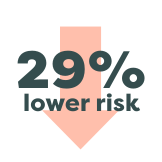
In a clinical trial, people who received IMFINZI + chemotherapy* before and after surgery, then IMFINZI alone, were 29% less likely to have their cancer get worse or come back.
people in the IMFINZI + chemotherapy* group were still living
people in the chemotherapy* + placebo group were still living
*Fluorouracil, leucovorin, oxaliplatin, and docetaxel (FLOT).
†At the time of data cut-off.
Start the conversation with your doctor
See a list of questions

IMFINZI is a medicine that may treat certain cancers by working with your immune system. IMFINZI can cause your immune system to attack normal organs and tissues in any area of your body and can affect the way they work. These problems can sometimes become severe or life-threatening and can lead to death. You can have more than one of these problems at the same time. These problems may happen anytime during treatment or even after your treatment has ended.



Getting medical treatment right away may help keep these problems from becoming more serious. Your healthcare provider will check you for these problems during your treatment with IMFINZI. Your healthcare provider may treat you with corticosteroid or hormone replacement medicines. Your healthcare provider may also need to delay or completely stop treatment with IMFINZI if you have severe side effects
Before you receive IMFINZI, tell your healthcare provider about all of your medical conditions, including if you:
Females who are able to become pregnant:
Tell your healthcare provider about all the medicines you take, including prescription and over-the-counter medicines, vitamins, and herbal supplements.
The most common side effects of IMFINZI when used with fluorouracil, leucovorin, oxaliplatin, and docetaxel (FLOT) in adults with gastric cancer (GC) or gastroesophageal junction adenocarcinoma (GEJC) that can be removed by surgery include: diarrhea; nausea; inflammation of the nerves causing numbness, weakness, tingling, or burning pain of the arms and legs; feeling tired; hair loss; decreased appetite; rash; stomach (abdominal) pain; vomiting; muscle and joint pain; fever; and pain and sores in the mouth.
Tell your healthcare provider if you have any side effect that bothers you or that does not go away. These are not all the possible side effects of IMFINZI. Ask your healthcare provider or pharmacist for more information.
Call your doctor for medical advice about side effects. You may
report side
effects related to AstraZeneca products  . If you prefer to
report these to the FDA, either visit www.FDA.gov/medwatch or call
1-800-FDA-1088.
. If you prefer to
report these to the FDA, either visit www.FDA.gov/medwatch or call
1-800-FDA-1088.
Call your doctor for medical advice about side effects. You may report side
effects related to AstraZeneca products . If you prefer to
report these to the FDA, either visit www.FDA.gov/medwatch or call 1-800-FDA-1088.
Please see Full Prescribing Information including Medication Guide for IMFINZI.
IMFINZI is a medicine that may treat certain cancers by working with your immune system. IMFINZI can cause your immune system to attack normal organs and tissues in any area of your body and can affect the...
IMFINZI is a medicine that may treat...

IMFINZI is a medicine that may treat certain cancers by working with your immune system. IMFINZI can cause your immune system...
 Request a care package